BOTANICAL INGREDIENTS. A CLOSER LOOK.
The Science Behind BugMace
Big outdoor plans. A closer look at the blend.
Meet the nine botanical active ingredients in BugMace, our DEET-free mosquito and insect repellent. Explore the published ingredient research, get to know the blend, and bring a little safari spirit to your next day outside.
Choose your pack at NewTechBio. Always use as directed.
9 botanical actives
22.7% actives by weight
DEET-free ready-to-use blend
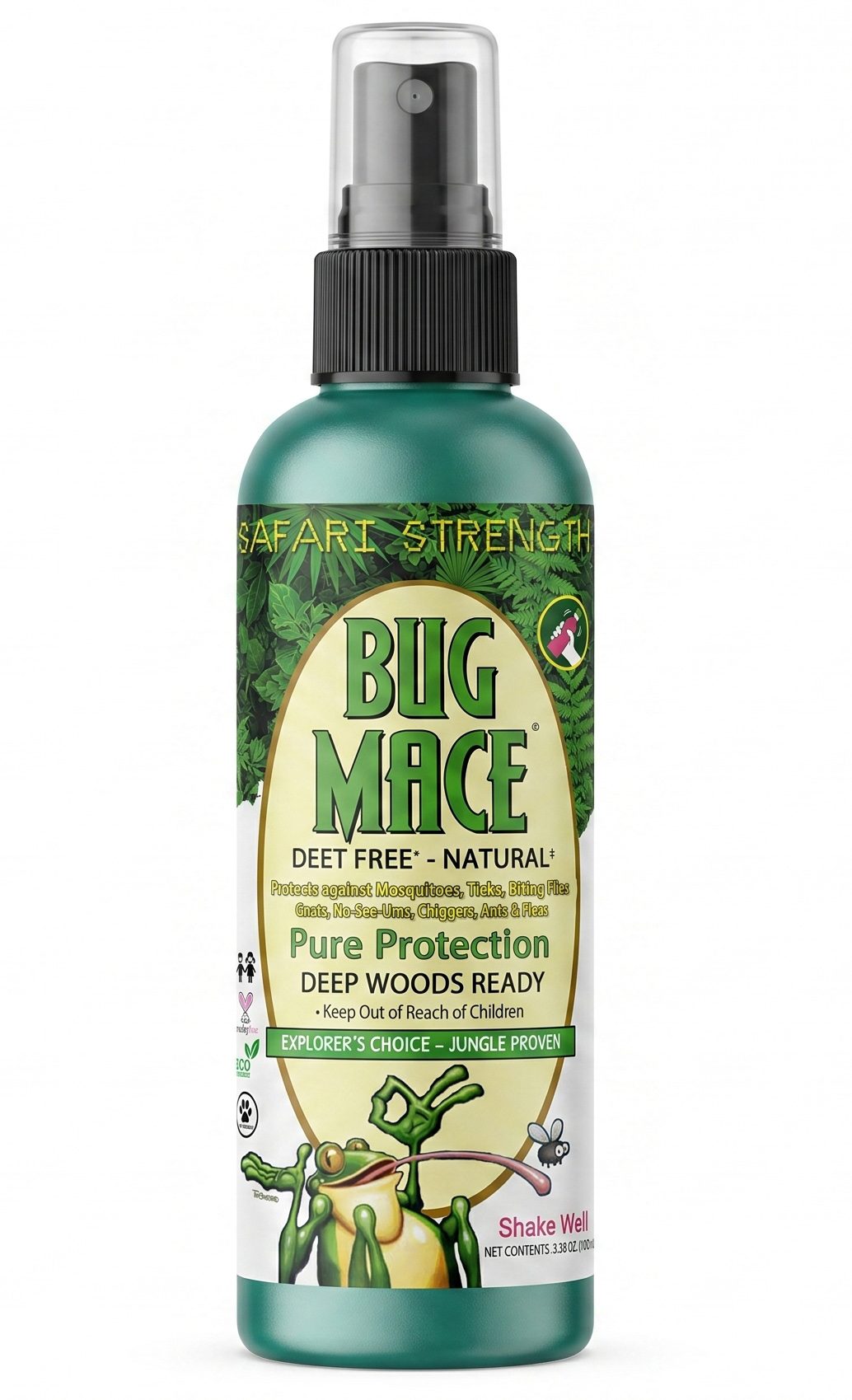
A little safari spirit.
A bottle ready for your outdoor routine.
Explore this page: Pest research The botanical blend Read the report Your questions
FOLLOW YOUR CURIOSITY
More than mosquitoes: explore the ingredient research
The botanical story reaches beyond a single pest. Our evidence review explores the 19 pest categories below, connecting ingredients in BugMace with published research on repellency, avoidance and feeding deterrence.
A clear view of the evidence. These studies used individual ingredients or other formulations. They are not finished-product tests establishing BugMace protection against every pest below. Species, concentration and application matter. For product use, follow the current BugMace label.
Mosquitoes
Geraniol, clove, peppermint, geranium, lemongrass and citronella have shown mosquito repellency in human-skin research. Researchers tested individual oils in lotions, providing ingredient-level evidence rather than a protection-time measurement for BugMace.
Research: Mosquito study
Gnats & no-see-ums
Gnats, no-see-ums (sand gnats).
Lemongrass oil prompted avoidance in laboratory research on biting midges. These small biting flies are among the insects people commonly call gnats. That research is relevant to the category, not a test of every insect described as a gnat.
Research: Biting-midge study
Flies
Flies, biting flies, black flies, stable flies.
Peppermint and lemongrass research includes laboratory housefly avoidance and stable-fly feeding deterrence. In separate field work, a citronella-based treatment reduced black flies in bird nests. The research spans different formulations and settings, rather than one personal-repellent test.
Research: Houseflies Stable flies Black flies
Ticks
Ticks, including deer ticks (blacklegged ticks), lone star ticks and brown dog ticks.
Studies have examined several BugMace ingredients against these tick types. Methods range from skin-contact tests to laboratory movement and larval assays. Results differ by oil, concentration and test method; laboratory avoidance is not automatically the same as protection on a person.
Research: Deer ticks Lone star ticks Brown dog ticks
Fleas
Peppermint essential oil showed repellency in research involving human fleas. The study adds another biting-pest category to the published ingredient research explored in our report; it did not test the finished BugMace formula.
Research: Flea study
Ants
Ants, fire ants, Argentine ants.
Citronella and peppermint have been studied as barriers that deter ants from crossing treated surfaces. Research includes red imported fire ants and Argentine ants. Barrier deterrence is different from eliminating a colony or treating an ant mound.
Research: Ant-barrier study
Mites & chiggers
Mites, chiggers.
Thyme has shown repellency in poultry red-mite research, while clove and geranium have been evaluated against chiggers. These are species-specific laboratory findings, not evidence that the finished formula has been tested against every mite or chigger.
Research: Mite study Chigger study
Bed bugs
Geraniol residues prompted avoidance in laboratory bed-bug research. In that same study, treated barriers did not stop bed bugs from reaching a food source and feeding. Avoidance should not be presented as proven bite prevention or an infestation treatment.
Research: Bed-bug study
Wasps
Field research found reduced attraction to baited traps with several oils found in BugMace, including a clove, geranium, lemongrass and rosemary blend. The study examined spatial repellency, not protection from stings or treatment of wasp nests.
Research: Wasp study
The categories include broad everyday names and more specific types. They are not 19 separate species.
Your next outdoor plan is calling.
Choose a bottle for your day bag, camping kit or next weekend away.
GET TO KNOW THE BLEND
Nine botanicals. One ready-to-use formula.
BugMace brings together nine botanical active ingredients in a DEET-free mosquito and insect repellent. The published research gives you a closer look at those ingredients and the different pests scientists have studied.
Why formulation matters
An ingredient is part of the story, not the whole story. Its concentration, the other ingredients around it and the way a repellent is applied can affect performance. That is why results from a research formula cannot simply be assigned to a different finished product.
A closer look at vanillin
The formula also contains 5.0% vanillin, listed separately from the nine active ingredients. Published research found that vanillin extended protection time in certain citronella lotions. That finding is useful formulation research, not a measured duration for BugMace.
Research: Vanillin formulation study
| Botanical active ingredient | By weight |
|---|---|
| Geraniol | 4.0% |
| Citronella oil | 3.0% |
| Lemongrass oil | 3.0% |
| Thyme oil | 3.5% |
| Clove oil | 1.5% |
| Cedarwood oil | 2.5% |
| Rosemary oil | 2.0% |
| Peppermint oil | 1.5% |
| Geranium oil | 1.7% |
| Total botanical active ingredients | 22.7% |
CURIOUS BY NATURE?
Take a closer look at the research
Read the source studies, explore the ingredient connections and see the complete pest-by-pest review. Our three-page report keeps the references together in one place.
BugMace Broad-Spectrum Repellency Evidence Packet
3 pages 18 references Ingredient and formulation research
This BugMace-provided literature review discusses ingredients and related formulations. It is not an independent laboratory test report for the finished BugMace product.
The reading link opens a new tab. The current product label remains the source for application directions and precautions.
A FEW GOOD QUESTIONS
Know the blend. Enjoy the outdoors.
What can ingredient research tell me?
It can show how a botanical ingredient affected a particular pest under the conditions of a study. Our report brings those findings together so you can explore the scientific background of ingredients in BugMace. Product-specific performance also depends on the finished formula and how it is used.
Does this report measure how long BugMace works?
No. Protection times in the cited studies belong to the ingredients or formulations actually tested. They should not be presented as measured BugMace protection times. Follow the current product label for use and reapplication guidance.
Is repelling the same as killing or controlling an infestation?
No. Repellency and avoidance describe how pests respond to a substance. Those findings alone do not establish that a product kills pests, eliminates colonies, treats bedding or nests, or prevents wasp stings. Use BugMace only as directed.
Where can I get BugMace?
Use any Shop BugMace button on this page to choose your pack and complete your order at NewTechBio. For other purchase information, visit Where to Buy.
MAKE ROOM FOR THE OUTDOORS
A little safari spirit goes a long way.
From the back porch to the next trailhead, bring BugMace along for the plans you are looking forward to. Explore the research here. Choose your bottle at NewTechBio.
DEET-free botanical mosquito and insect repellent. Use only as directed.